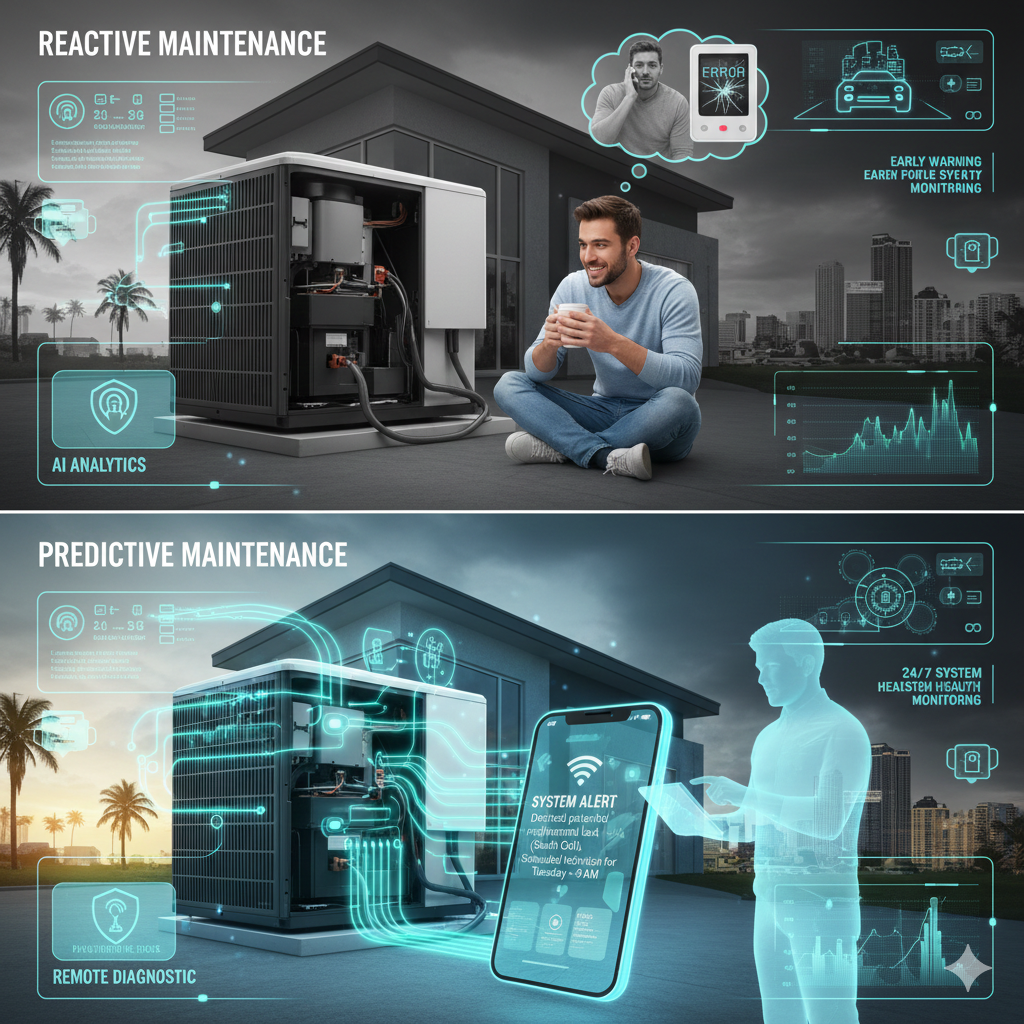
For years, HVAC maintenance in Columbia, South Carolina, followed a predictable pattern: wait until something breaks, then call for a repair. Or, at best, schedule a yearly check-up. But as we step further into 2026, artificial intelligence (AI) and the Internet of Things (IoT) are revolutionizing this approach, transforming HVAC care from reactive to predictive.
Your home’s heating and cooling system is no longer just a machine; it’s an intelligent network of sensors and data, constantly communicating its health. This means fewer emergency breakdowns during our sweltering summers or unexpected cold snaps, greater efficiency, and ultimately, a more comfortable and cost-effective home.
1. Early Warning Systems: Catching Problems Before They Start
Imagine your AC unit telling you it needs attention before it stops blowing cold air in the middle of a July heatwave. That’s the power of AI in HVAC.
-
IoT-Connected Sensors: Modern HVAC systems are equipped with an array of smart sensors that monitor everything from refrigerant pressure and motor vibrations to coil temperatures and airflow. These sensors continuously collect data and feed it to an AI-powered analytics platform.
-
Pattern Recognition: The AI analyzes these vast amounts of data, learning the normal operating patterns of your specific system. If it detects subtle deviations—a slightly higher motor temperature than usual, or a gradual drop in refrigerant pressure—it flags these anomalies.
-
Proactive Alerts: Instead of waiting for a catastrophic failure, the system can send an alert to you, indicating a potential issue like a failing capacitor or a developing refrigerant leak, sometimes weeks before a noticeable problem occurs. This allows for scheduled, convenient repairs rather than urgent, expensive emergencies.
2. Predictive Performance: Optimizing for Your Comfort and Savings
AI isn’t just about spotting failures; it’s about making your system perform at its peak efficiency, tailored precisely to your Columbia lifestyle.
-
Learning Your Habits: AI-driven thermostats go beyond simple programming. They learn your family’s occupancy patterns, preferred temperatures, and even integrate local weather forecasts.
-
Proactive Adjustments: For example, if a sudden heatwave is predicted for Friday, the AI might subtly pre-cool your home on Thursday evening, making your system work less strenuously during peak demand and potentially lowering your energy consumption. It can even learn which “zones” of your home are used most and optimize heating or cooling for those areas.
3. The “Remote Handshake”: Virtual Troubleshooting and Support
Many minor HVAC issues can now be resolved without a technician ever setting foot in your home.
-
Remote Diagnostics: With your permission, technicians can securely log into your AI-connected system remotely. They can run diagnostics, clear minor error codes, and even adjust settings or recalibrate components.
-
Reduced Service Calls: This “remote handshake” capability saves you the cost and inconvenience of a physical service call for simple fixes, getting your system back to optimal performance faster. For more complex issues, the remote diagnostic still provides the technician with valuable information, allowing them to arrive better prepared with the right tools and parts.
For homeowners in Columbia, AI in HVAC maintenance means a new era of reliability, efficiency, and peace of mind. Your heating and cooling system becomes a silent, vigilant guardian, working intelligently to keep your home comfortable and prevent costly surprises. Embracing this smart technology is about investing in the future of your home’s comfort and longevity.